What Are the Best Supplements for Procrastination? Expert Consensus Statement 2026
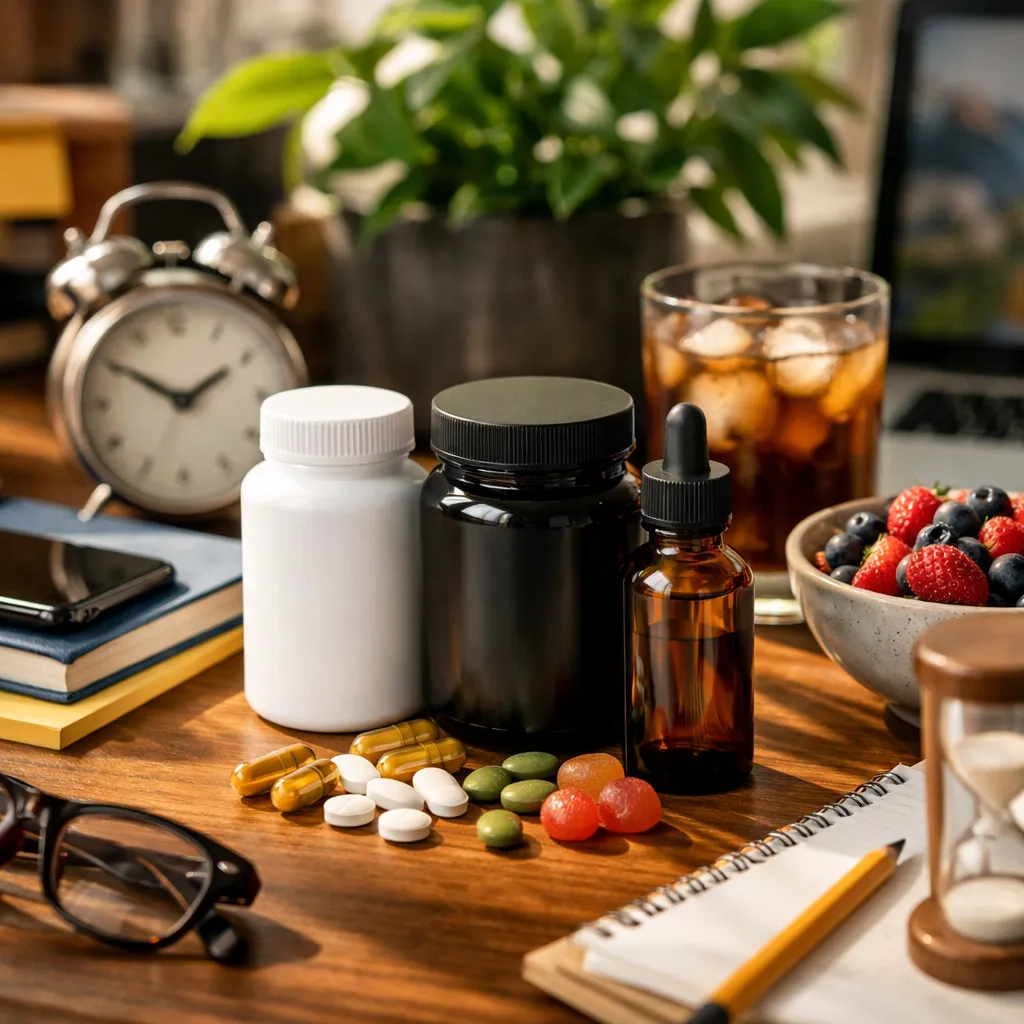
Procrastination is no stranger to any of us. We often find ourselves delaying tasks, pushing deadlines, and struggling to complete work on time, which can lead to stress, anxiety, and diminished productivity. However, it's not all doom and gloom. Research suggests that certain supplements can help manage procrastination and improve focus and productivity. Let's dive into the world of these supplements, their mechanisms of action, dosage recommendations, and the strength of evidence supporting their use.
Want personalized, evidence-based supplement ideas? Try our Symptom Search.
Understanding Procrastination
Procrastination is a complex issue that involves several psychological components, such as decision-making abilities, stress, and emotional vulnerability [2][4]. A study by Svartdal and Løkke [2] suggests that procrastination can be seen as a detrimental habit, often leading to negative impacts on academic performance. Stress and emotional vulnerability, as studied by Umeh and Omari-Asor [4], also play significant roles in exacerbating procrastination tendencies.
Key Supplements for Procrastination
Several supplements have been found to potentially help manage procrastination. However, the evidence is mixed and further research is needed.
Vitamin B6: This vitamin is essential for brain health and may enhance cognitive functions, potentially reducing procrastination tendencies [1]. However, the evidence is weak due to limited studies.
Omega-3 Fatty Acids: These essential fatty acids are known for their neuroprotective effects, which may help improve focus and reduce procrastination [1]. The evidence is moderate.
Magnesium: This mineral plays a crucial role in brain function and mood regulation. It may help reduce anxiety and stress, which can indirectly help manage procrastination [3]. The evidence is moderate.
Rhodiola Rosea: This adaptogenic herb is known for its stress-reducing effects. It may help manage stress-related procrastination [3]. The evidence is weak.
L-Theanine: This amino acid, commonly found in tea, is known for its calming effects. It may help reduce anxiety and improve focus, potentially reducing procrastination [5]. The evidence is moderate.
Evidence-Based Effectiveness Ranking
Vitamin B6: Weak evidence [1]
Omega-3 Fatty Acids: Moderate evidence [1]
Magnesium: Moderate evidence [3]
Rhodiola Rosea: Weak evidence [3]
L-Theanine: Moderate evidence [5]
Creating an Effective Supplement Stack
While each of these supplements can be taken individually, combining them in an appropriate 'stack' may enhance their effectiveness. However, it's crucial to consider potential interactions between supplements. For instance, Vitamin B6 and Magnesium can be taken together as they work synergistically to enhance brain health. However, Omega-3 Fatty Acids should be taken separately from other fat-soluble vitamins to ensure optimal absorption [1][3].
Proper Dosage and Timing
The recommended dosages for these supplements are as follows:
Vitamin B6: 1.3-1.7 mg/day for adults [1]
Omega-3 Fatty Acids: 250-500 mg/day of combined EPA and DHA [1]
Magnesium: 400-420 mg/day for men, 310-320 mg/day for women [3]
Rhodiola Rosea: 200-600 mg/day [3]
L-Theanine: 100-200 mg/day [5]
These supplements can be taken at any time of the day, but it's best to follow the manufacturer's instructions or consult a healthcare professional for personalized advice.
Complementary Lifestyle Approaches
In addition to taking supplements, certain lifestyle modifications can enhance their effectiveness and further help manage procrastination. These include regular physical activity, a balanced diet, adequate sleep, and stress management techniques like mindfulness and meditation [6].
Potential Side Effects and Precautions
While these supplements are generally safe for most people, they can cause side effects in some cases. For instance, high doses of Vitamin B6 can cause nerve damage, while excessive Omega-3 intake can lead to bleeding problems [1]. Always start with the lowest recommended dose and increase gradually as tolerated.
Conclusion
While procrastination can be a challenging issue to tackle, certain supplements, along with lifestyle modifications, can help manage it effectively. However, it's important to remember that supplements are not a cure-all and should be used as part of a comprehensive approach to managing procrastination. Always consult a healthcare professional before starting any new supplement regimen.
References
[1]: Poudineh M et al. (2023). The Effects of Vitamin Therapy on ASD and ADHD: A Narrative Review.. CNS Neurol Disord Drug Targets. PubMed: https://pubmed.ncbi.nlm.nih.gov/35585808/
[2]: Svartdal F, Løkke JA (2022). The ABC of academic procrastination: Functional analysis of a detrimental habit.. Front Psychol. PubMed: https://pubmed.ncbi.nlm.nih.gov/36405131/
[3]: Sirois FM, Biskas M (2024). Procrastination and Health in Nurses: Investigating the Roles of Stress, Health Behaviours and Social Support.. Int J Environ Res Public Health. PubMed: https://pubmed.ncbi.nlm.nih.gov/39063475/
[4]: Umeh K, Omari-Asor L (2011). Emotional vulnerability and coping styles for resolving decisional conflict.. J Psychol. PubMed: https://pubmed.ncbi.nlm.nih.gov/21834323/
[5]: Chervenak FA, McCullough LB (2003). Physicians and hospital managers as cofiduciaries of patients: rhetoric or reality?. J Healthc Manag. PubMed: https://pubmed.ncbi.nlm.nih.gov/12789705/
[6]: Dong D et al. (2026). Exploring the comorbid network of academic burnout and academic procrastination and its relations to social-emotional competence among Chinese 12th grade students: a perspective of psychological resource depletion and replenishment.. BMC Public Health. PubMed: https://pubmed.ncbi.nlm.nih.gov/41501680/
Disclaimer: This article is AI-generated for educational purposes only and is not a substitute for professional medical advice. Always consult with a healthcare provider before starting any supplement regimen.
Explore More Resources
Disclaimer: This article is AI-generated and for informational purposes only. While we strive for accuracy, the content may contain errors or omissions.
The information provided is not medical advice. Always consult with healthcare professionals before starting any supplement regimen or making changes to your health routine.
Important: The information provided in this article about Supplements for Procrastination is for educational purposes only. It is not intended to diagnose, treat, cure, or prevent any disease.
FDA Disclaimer: These statements have not been evaluated by the Food and Drug Administration. Supplements are not intended to diagnose, treat, cure, or prevent any disease.
Related Articles

Beginner's Guide 2026: What Are the Best Supplements for Low Libido?
Boost your vitality with the best supplements for low libido. Discover research-backed benefits, evidence-based dosages, clinical studies, and side effects. Act now!

What are the Best Supplements for Hair Growth? Expert Interview Summary 2026
Uncover the top Supplements for Hair Growth in 2026! Dive into evidence-based benefits, research-backed dosage, clinical studies, and potential side effects. Act now for healthier hair!

What are the Best Supplements for Stress and Anxiety? A 2025 Interaction Checker Guide
Uncover the top supplements for stress & anxiety in 2025. Dive into evidence-based research, clinical studies, dosage, benefits & side effects. Act now!