Natural Supplements for Anxiety: Evidence-Based Options
Anxiety affects millions worldwide, and many people seek natural alternatives to complement their wellness routines. While natural supplements for anxiety should never replace professional medical care, research suggests certain compounds may offer supportive benefits.
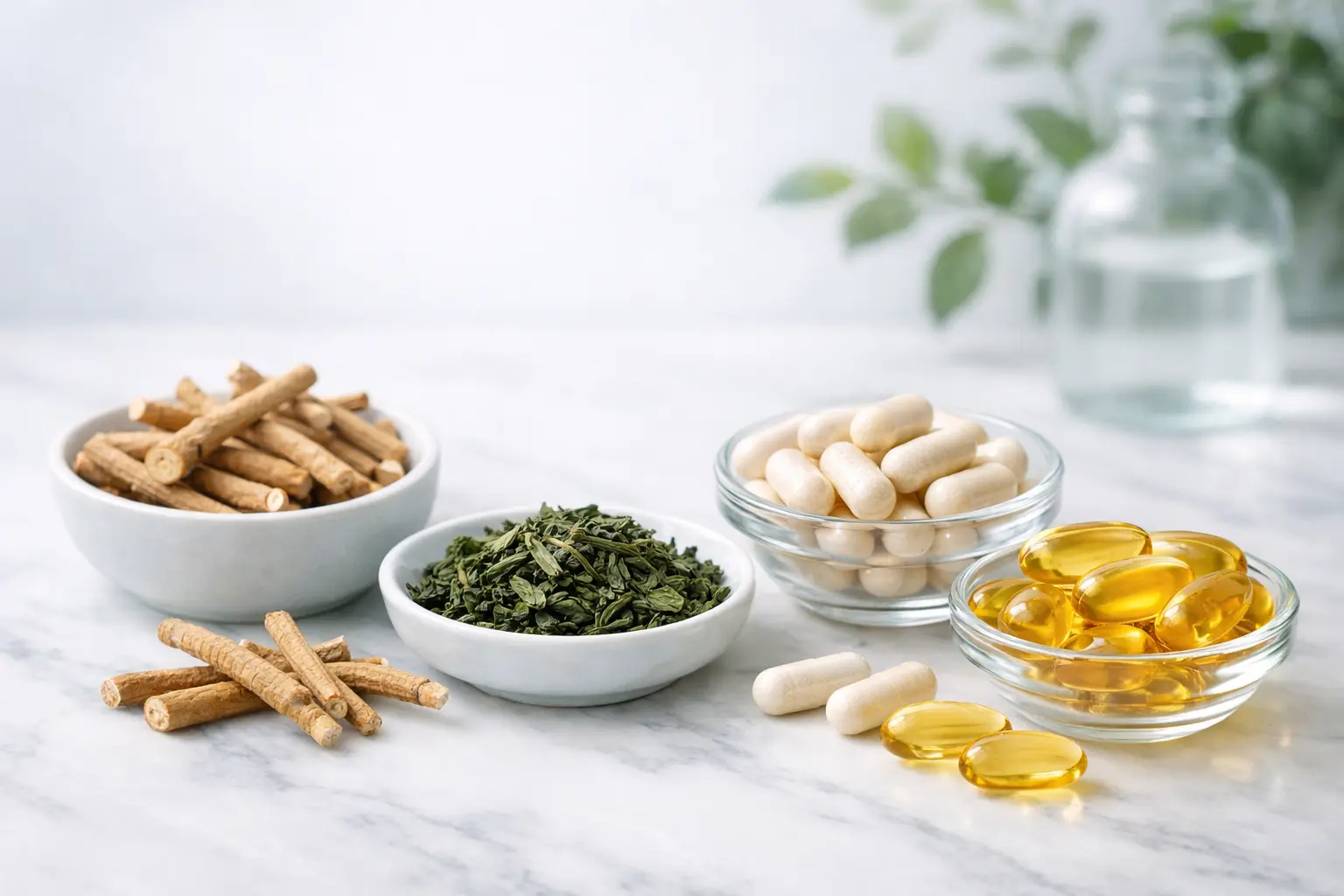
Key Natural Supplements Studied for Anxiety
Ashwagandha (Withania somnifera)
Ashwagandha is an adaptogenic herb used in traditional Ayurvedic medicine. Multiple clinical trials have examined its effects on stress and anxiety. A 2019 systematic review published in the Journal of Alternative and Complementary Medicine found that ashwagandha supplementation was associated with reduced anxiety scores in several randomized controlled trials.
Typical dosage studied: 300-600 mg of standardized extract daily. Effects may take 2-8 weeks to become noticeable.
Reference: Pratte MA, et al. J Altern Complement Med. 2019 (PubMed)
L-Theanine
L-theanine is an amino acid naturally found in green tea. Research suggests it may promote relaxation without causing drowsiness. Studies published in the Journal of Clinical Psychiatry and Nutrients have shown that L-theanine can increase alpha brain wave activity, which is associated with a relaxed but alert mental state.
Typical dosage studied: 200-400 mg daily. Some people report feeling effects within 30-60 minutes.
Reference: Hidese S, et al. Nutrients. 2019 (PubMed)
Magnesium
Magnesium is an essential mineral involved in over 300 biochemical reactions in the body, including those that regulate the nervous system. Research published in PLoS One and Nutrients suggests that magnesium deficiency may be linked to increased anxiety, and supplementation may help support nervous system function.
Typical dosage studied: 200-400 mg daily. Magnesium glycinate and magnesium threonate are forms often recommended for nervous system support.
Reference: Boyle NB, et al. Nutrients. 2017 (PubMed)
Omega-3 Fatty Acids
Omega-3 fatty acids, particularly EPA and DHA found in fish oil, have been studied for their potential effects on mood and anxiety. A 2018 meta-analysis in JAMA Network Open examined 19 clinical trials and found that omega-3 supplementation was associated with reduced anxiety symptoms.
Typical dosage studied: 1,000-2,000 mg combined EPA/DHA daily, with higher EPA ratios often preferred for mood support.
Reference: Su KP, et al. JAMA Netw Open. 2018 (PubMed)
Important Considerations
Individual variation: Natural supplements for anxiety affect people differently. What works for one person may not work for another, and effects can vary based on dosage, quality, and individual biochemistry.
Quality matters: Not all supplements are created equal. Look for products that have been third-party tested for purity and potency by organizations like USP, NSF, or ConsumerLab.
Potential interactions: Natural supplements can interact with medications, including anti-anxiety medications, blood thinners, and others. Always consult a healthcare provider before starting any new supplement.
Side effects: While generally well-tolerated, natural supplements for anxiety can cause side effects. Ashwagandha may cause digestive upset in some people, magnesium can have a laxative effect at higher doses, and omega-3s may increase bleeding risk.
Not a replacement: Natural supplements should be viewed as one part of a comprehensive approach to managing anxiety, which may include therapy, lifestyle changes, stress management techniques, and when appropriate, prescription medications.

Find Evidence-Based Supplements for Anxiety
Ready to explore natural supplements for anxiety backed by scientific research? Use our free search tool to discover evidence-based options with links to peer-reviewed studies.
Medical Disclaimer
Educational Content: This article provides educational information about natural supplements for anxiety based on available scientific research. It is not intended to diagnose, treat, cure, or prevent any disease.
Not Medical Advice: The information provided is for educational purposes only and should not replace professional medical advice, diagnosis, or treatment.
Consult Healthcare Professionals: If you experience anxiety, consult with qualified healthcare professionals before starting any supplement regimen. This is especially important if you have existing health conditions, take medications, are pregnant, or are nursing.