Natural Supplements for Sleep: Evidence-Based Options
Quality sleep is essential for health and well-being, yet millions struggle with sleep issues. While natural supplements for sleep should complement good sleep hygiene practices, research suggests certain compounds may support healthy sleep patterns.
Key Natural Supplements Studied for Sleep
Melatonin
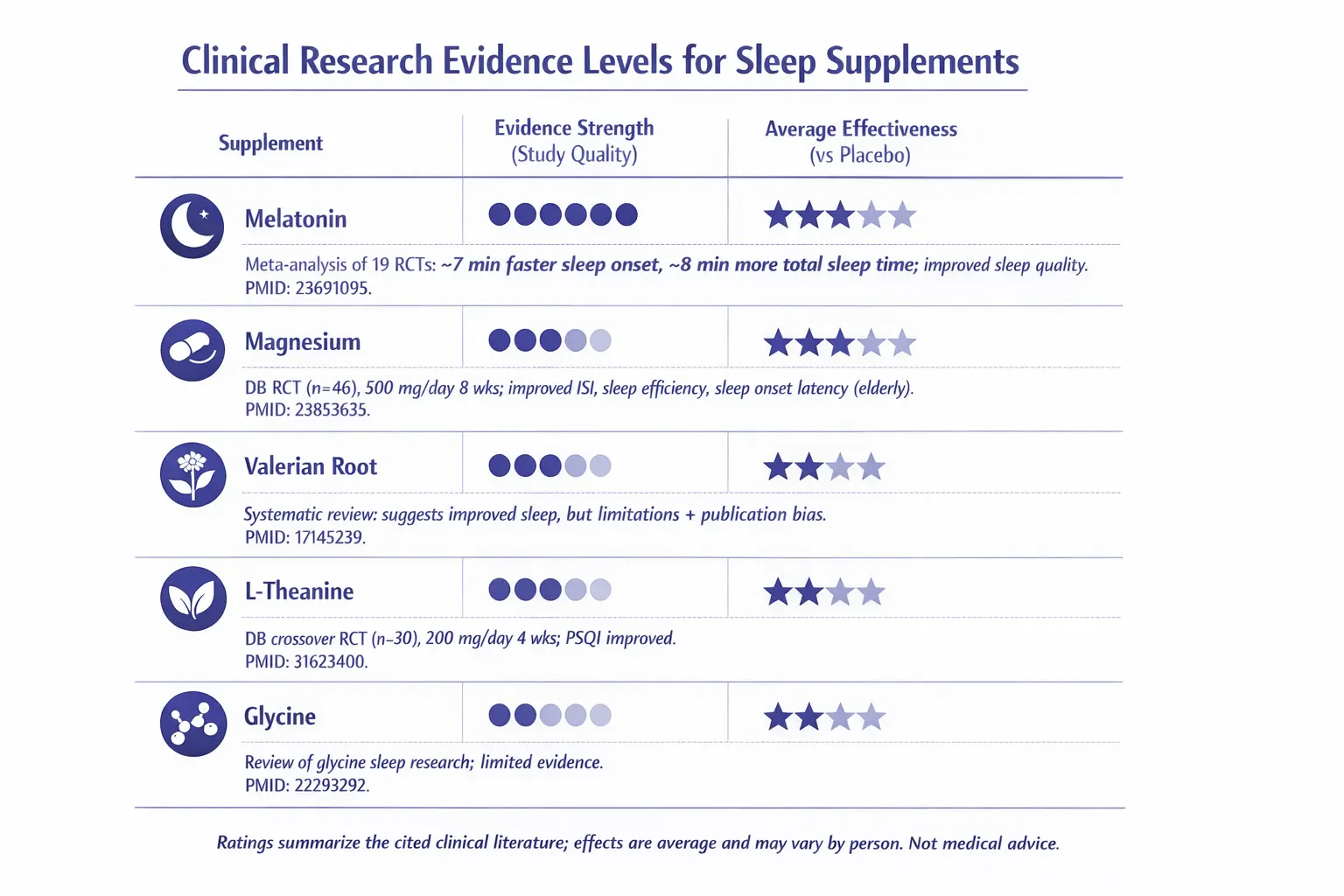
Melatonin is a hormone naturally produced by the pineal gland that regulates the sleep-wake cycle. Numerous studies have examined supplemental melatonin for sleep issues. A 2013 meta-analysis published in PLoS One analyzed 19 studies and found that melatonin supplementation significantly reduced sleep onset latency and increased total sleep time.
Typical dosage studied: 0.5-5 mg taken 30-60 minutes before bedtime. Lower doses (0.5-1 mg) are often effective and may reduce next-day grogginess.
Magnesium
Magnesium is an essential mineral that plays a role in regulating neurotransmitters involved in sleep. Research published in the Journal of Research in Medical Sciences found that magnesium supplementation improved subjective measures of insomnia, including sleep efficiency, sleep time, and sleep onset latency in elderly subjects.
Typical dosage studied: 200-400 mg daily, typically taken in the evening. Magnesium glycinate is a form commonly recommended for sleep support due to better absorption and calming properties.
Valerian Root
Valerian root (Valeriana officinalis) has been used traditionally for sleep support. A systematic review published in the American Journal of Medicine examined 16 studies and found that valerian might improve sleep quality without producing side effects. However, the authors noted that methodological quality varied across studies.
Typical dosage studied: 300-600 mg of valerian extract taken 30-120 minutes before bedtime. Effects may take several weeks of consistent use to become noticeable.
Reference: Bent S, et al. Am J Med. 2006 (PubMed)
L-Theanine
L-theanine is an amino acid found in green tea that promotes relaxation without sedation. Research published in Nutrients suggests that L-theanine may improve sleep quality by reducing stress and promoting alpha brain wave activity associated with relaxed wakefulness, which can facilitate the transition to sleep.
Typical dosage studied: 200-400 mg taken before bedtime. L-theanine is often combined with other sleep-supporting nutrients like magnesium or GABA.
Reference: Hidese S, et al. Nutrients. 2019 (PubMed)
Glycine
Glycine is an amino acid that may improve sleep quality by lowering core body temperature and affecting neurotransmitter systems. Studies published in Sleep and Biological Rhythms and Frontiers in Neurology found that glycine supplementation before bedtime improved subjective sleep quality and reduced daytime sleepiness.
Typical dosage studied: 3 grams taken before bedtime. Glycine is generally well-tolerated with minimal side effects.
Reference: Inagawa K, et al. Sleep Biol Rhythms. 2006 (PubMed)
Important Considerations
Sleep hygiene first: Natural supplements for sleep work best when combined with good sleep hygiene practices, including consistent sleep schedules, a cool dark bedroom, limiting screen time before bed, and avoiding caffeine late in the day.
Quality and timing matter: Choose supplements that have been third-party tested for purity by organizations like USP, NSF, or ConsumerLab. Timing is also important—most sleep supplements should be taken 30-60 minutes before bedtime.
Potential interactions: Natural supplements for sleep can interact with medications, including sedatives, blood pressure medications, and antidepressants. Always consult a healthcare provider before starting any new supplement.
Side effects: While generally well-tolerated, sleep supplements can cause side effects. Melatonin may cause morning grogginess, valerian can cause headaches in some people, and magnesium may have a laxative effect at higher doses.
Not for chronic insomnia: If you have persistent sleep problems lasting more than a few weeks, consult a healthcare provider. Chronic insomnia may require professional evaluation and treatment beyond natural supplements.
Find Evidence-Based Supplements for Sleep
Ready to explore natural supplements for sleep backed by scientific research? Use our free search tool to discover evidence-based options with links to peer-reviewed studies.
Medical Disclaimer
Educational Content: This article provides educational information about natural supplements for sleep based on available scientific research. It is not intended to diagnose, treat, cure, or prevent any disease.
Not Medical Advice: The information provided is for educational purposes only and should not replace professional medical advice, diagnosis, or treatment.
Consult Healthcare Professionals: If you experience persistent sleep problems, consult with qualified healthcare professionals before starting any supplement regimen. This is especially important if you have existing health conditions, take medications, are pregnant, or are nursing.